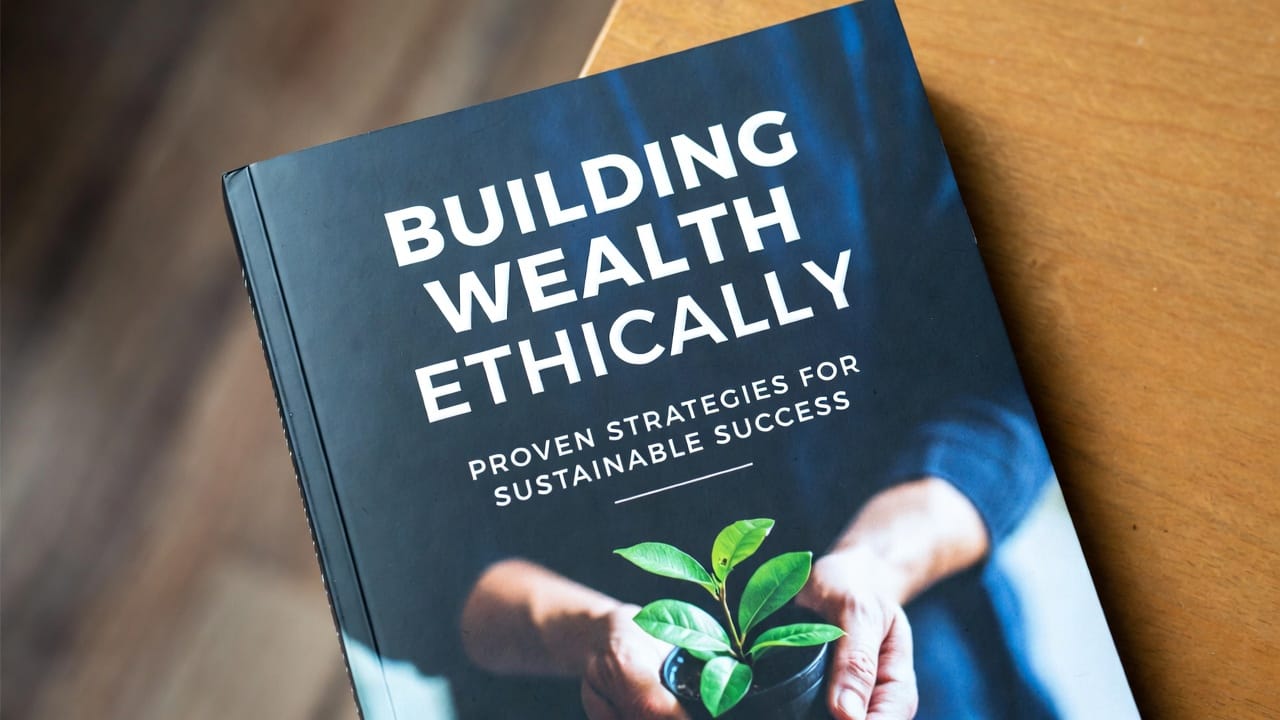
Building Wealth Ethically
In a world where get-rich-quick schemes and cutthroat business tactics dominate headlines, building wealth ethically might seem like a contradiction. Yet, history proves otherwise—think of philanthropists like Warren Buffett or social entrepreneurs like Muhammad Yunus, who amassed fortunes while prioritizing integrity and societal good. Ethical wealth building isn’t about deprivation; it’s about creating lasting prosperity through sustainable, value-driven methods. This post explores practical strategies to grow your wealth without compromising your values, backed by real-world examples and actionable steps.
What Does Ethical Wealth Building Mean?
Ethical wealth building revolves around generating financial success in ways that benefit individuals, communities, and the planet. It contrasts with exploitative practices like predatory lending or environmental destruction for profit. At its core, it’s about alignment: your money-making aligns with your moral compass.
Key characteristics include:
- Transparency: Honest dealings with no hidden fees or deceit.
- Sustainability: Long-term gains over short-term windfalls.
- Impact: Creating positive ripple effects, such as fair wages or eco-friendly products.
- Personal Integrity: Wealth that doesn’t require sacrificing relationships, health, or principles.
By focusing on these, you avoid the pitfalls of unethical paths, like legal troubles or reputational damage, which have toppled figures like Bernie Madoff.
Core Principles of Ethical Wealth Accumulation
To build wealth ethically, anchor your efforts in timeless principles. These form the foundation for all strategies discussed later.
1. Value Creation Over Extraction
Wealth flows from solving real problems. Instead of extracting value (e.g., through scams), create it by offering genuine solutions.
Example: Patagonia founder Yvon Chouinard built a billion-dollar company by making durable outdoor gear and donating profits to environmental causes. His ethical stance attracted loyal customers, fueling organic growth.
2. Delayed Gratification and Patience
Ethical paths prioritize compound growth over instant riches. Save, invest, and let time work its magic.
3. Lifelong Learning and Skill-Building
Invest in yourself first. Ethical wealth builders continuously upskill to provide high-value services.
4. Community and Collaboration
Wealth multiplies through networks built on trust, not manipulation. Give referrals, mentor others, and collaborate ethically.
5. Giving Back
Incorporate philanthropy early. Tithing a portion of income or volunteering builds a positive feedback loop—many studies show generous people earn more over time.
Adopting these principles ensures your wealth is resilient and fulfilling.
Ethical Saving and Budgeting Strategies
The bedrock of wealth is disciplined saving. Ethically, this means living below your means without unnecessary frugality that harms well-being.
Create a Value-Aligned Budget
Use the 50/30/20 rule adapted ethically: 50% needs, 30% wants (prioritizing meaningful experiences), 20% savings/investments/charity.
Tools:
- Apps like YNAB (You Need A Budget) for mindful tracking.
- Zero-based budgeting: Assign every dollar a job, including ethical giving.
Example: A teacher earning $60,000 annually budgets $1,000 monthly to savings. After five years at 7% return, that’s over $70,000—seed money for ethical investments.
Emergency Funds and Debt Freedom
Build a 3-6 month expense fund in a high-yield savings account. Pay off high-interest debt ethically by negotiating rates transparently, avoiding debt consolidation scams.
Pro Tip: Automate transfers on payday to enforce discipline.
Ethical Investing for Long-Term Growth
Investing ethically means directing capital to companies and causes that align with your values, often yielding competitive returns.
Impact Investing and ESG Funds
Environmental, Social, Governance (ESG) criteria filter investments. Funds like Vanguard ESG U.S. Stock ETF have historically matched market performance.
Steps to Start:
- Assess values: Animal welfare? Climate action?
- Open a brokerage like Fidelity or Vanguard.
- Diversify: 60% stocks, 30% bonds, 10% alternatives like community solar projects.
Real-World Example: The Rise Fund, backed by TPG, invests in ethical tech like Kindred Systems (AI robotics), generating 15-20% returns while advancing worker safety.
Index Funds and Robo-Advisors
For beginners, low-cost S&P 500 index funds are ethical by default—broad exposure without picking volatile stocks.
Case Study: Investor Vicki Robin, co-author of Your Money or Your Life, retired early by ethically indexing 70% of her portfolio, emphasizing simplicity and low fees.
Avoid: Day trading or crypto hype, which often preys on uninformed investors.
Launching an Ethical Business or Side Hustle
Entrepreneurship is a powerhouse for ethical wealth, focusing on products/services that genuinely help.
Identify Market Gaps with Integrity
Solve problems you care about. Conduct ethical market research via surveys, not manipulative ads.
Profitable Ideas:
- Sustainable Products: Eco-friendly cleaning supplies (e.g., Blueland’s refill model hit $10M revenue ethically).
- Consulting: Share expertise in green energy or diversity training.
- Online Courses: Platforms like Teachable for skill-sharing (e.g., ethical marketing courses).
Example: TOMS Shoes’ one-for-one model donated millions of shoes, building a $600M brand before evolving sustainably.
Scaling Responsibly
Hire fairly (living wages), source ethically, and price transparently. Use B Corp certification for credibility.
Side Hustle List:
- Freelance writing for nonprofits.
- Tutoring underserved students.
- Upcycling furniture for local sales.
Aim for $500-2000/month initially, reinvesting 50% into growth.
Advancing Your Career Ethically
Climbing the ladder without backstabbing requires skill and relationships.
Negotiation and Promotion Strategies
Document achievements, seek mentors, and negotiate salaries data-driven (use Glassdoor ethically).
Tips:
- Network via LinkedIn groups focused on industry ethics.
- Pursue certifications like CFA for finance or LEED for green building.
Example: Sheryl Sandberg ethically rose at Google/Facebook by advocating Lean In Circles, promoting women ethically.
Job Hopping Done Right
Switch roles every 2-3 years for 10-20% raises, but leave on good terms with thank-you notes.
Real-World Success Stories
- Warren Buffett: Berkshire Hathaway’s ethical value investing turned $10,000 into billions, with pledges to donate 99% of wealth.
- Anita Roddick of The Body Shop: Built $1B empire on fair-trade ingredients and anti-animal testing, selling ethically to L’Oréal.
- Modern Millennial: Blogger Ramit Sethi teaches “rich life” budgeting, earning millions via books/courses without sleazy upsells.
These stories show ethics scales.
Common Pitfalls and How to Avoid Them
Even ethical builders falter. Here’s how to sidestep traps:
| Pitfall | Why It’s Unethical | Avoidance Strategy |
|---|---|---|
| Lifestyle Inflation | Overspending on status symbols harms sustainability. | Cap fun money; track net worth quarterly. |
| Get-Rich-Quick Schemes | Often scams exploiting hope. | Vet with SEC filings; if it sounds too good, walk. |
| Unethical Partnerships | Short-term gain erodes trust. | Due diligence: Check references, align values. |
| Neglecting Taxes | Evading duties burdens society. | Use ethical accountants; contribute fairly. |
| Burnout | Sacrificing health for money. | Set boundaries; prioritize rest. |
Regular self-audits keep you on track.
Conclusion
Building wealth ethically is not only possible—it’s profoundly rewarding. By embracing value creation, principled investing, and honest entrepreneurship, you craft a legacy of prosperity and purpose. Start small today: Review your budget, open an ESG fund, or brainstorm a side hustle. Over time, compound ethics will compound your wealth, proving that doing good is the ultimate smart money move.
Infinite Power Consulting – Where Potential Meets Possibility