
Embracing Abundance Thinking for Deeper Connections
Have you ever felt like your relationships could be richer, more fulfilling? In a world full of scarcity – where we worry about not having enough time, love, or resources – it’s easy to hold back. But what if you shifted to abundance thinking? This mindset sees plenty to go around, opening doors to genuine bonds. Abundance thinking isn’t just about money; it’s a way to approach life, especially relationships, with openness and joy. Let’s explore how fostering meaningful relationships starts with this powerful perspective.
What Is Abundance Thinking?
Abundance thinking means believing there’s enough for everyone. Instead of fearing loss, you focus on growth and sharing. It’s the opposite of scarcity, where you hoard or compete. In relationships, abundance thinking lets you give freely, knowing that generosity comes back around.
Think about it: when you operate from abundance, you stop seeing others as threats to your happiness. You celebrate their wins because you know yours are coming too. This shift can transform how you connect with friends, family, partners, and even colleagues.
Psychologists like Carol Dweck, who studies mindsets, show that growth-oriented thinking leads to better outcomes. Abundance thinking builds on that, emphasizing plenty over limits. It’s simple but profound – and it works wonders for building meaningful relationships.
The Scarcity Trap in Relationships
Most of us fall into scarcity without realizing it. You might think, “If my partner spends time with friends, there’s less for me.” Or with friends, “They’ll forget about me if I don’t keep score.” This scarcity mindset breeds jealousy, resentment, and shallow ties.
Scarcity makes us clingy or distant. We withhold affection, fearing rejection, or nitpick, worried we’ll lose what we have. The result? Relationships that feel draining rather than nurturing.
I’ve seen this in my own life and with clients. One woman shared how her fear of not being “enough” kept her from opening up, leaving her lonely despite a full social circle. Switching to abundance thinking changed everything for her.
Breaking free from scarcity starts with awareness. Notice when you think in limits – “I can’t trust them” or “There’s not enough love.” Then, reframe: “There’s room for everyone to thrive.” This small step paves the way for fostering meaningful relationships.
Why Abundance Thinking Strengthens Bonds
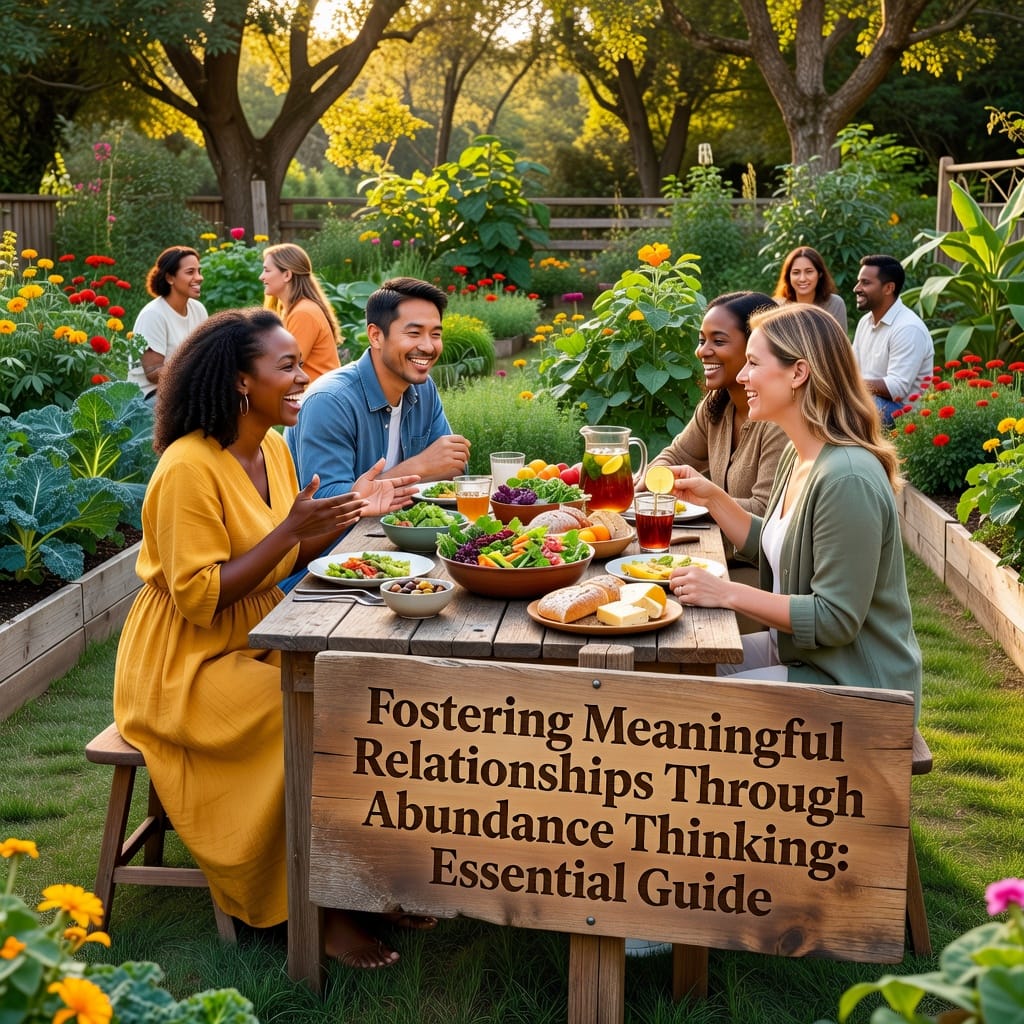
Abundance thinking fosters trust and vulnerability, the cornerstones of any solid relationship. When you believe in plenty, you’re more likely to share your true self. No more hiding behind walls; instead, you invite others in with confidence.
It also encourages empathy. From an abundant place, you listen without judgment, understanding that someone’s struggles don’t diminish your own peace. This builds deeper emotional connections.
Research backs this up. Studies from positive psychology, like those in the Journal of Personality and Social Psychology, link optimistic, abundant views to stronger social networks and higher life satisfaction.
In practical terms, abundance thinking reduces conflict. Arguments often stem from scarcity fears – “You’re taking my share!” With abundance, you seek win-win solutions, turning disagreements into opportunities for growth.
For more on building this foundation, check out our blog post on the basics of an abundance mindset. It dives into daily practices that make all the difference.
Shifting Your Mindset: Practical Steps
Ready to embrace abundance thinking? It doesn’t happen overnight, but small habits build momentum. Start by journaling grateful thoughts each morning. List three ways your relationships enrich your life – this counters scarcity’s negativity.
Another tip: practice generosity without expectation. Send a thoughtful text to a friend or help a colleague without keeping score. Abundance thinking thrives on giving, reinforcing that there’s always more to share.
Surround yourself with abundant people. Their energy rubs off, making it easier to foster meaningful relationships. Avoid chronic complainers; they pull you back into scarcity.
Meditation apps can help too. Try guided sessions on gratitude to rewire your brain toward plenty. Over time, you’ll notice less anxiety and more openness in your interactions.
Applying Abundance Thinking in Romantic Relationships
Romantic bonds offer a prime arena for abundance thinking. Instead of fearing loss – “What if they leave?” – focus on the joy of togetherness. Celebrate your partner’s strengths, knowing their success enhances yours.
Communication flows better from abundance. Share feelings openly, trusting the relationship can handle honesty. This vulnerability deepens intimacy.
A client of mine struggled with jealousy in her marriage. By shifting to abundance thinking, she started affirming her husband’s achievements. Their connection grew stronger, with more laughter and less tension.
Set shared goals together. Planning a trip or hobby fosters teamwork, reminding you both of the unlimited possibilities ahead.
Don’t forget self-love. Abundance thinking starts within – treat yourself kindly, so you attract partners who do the same.
If you’re working on relationship dynamics, our portfolio piece on couples coaching shares real stories of transformation through mindful approaches.
Building Lasting Friendships with an Abundant Heart
Friendships thrive when we let go of scarcity’s grip. How often do we cancel plans because we’re “too busy,” only to regret the missed connection? Abundance thinking values time as expansive, making room for those who matter.
Reach out first. In a give-and-take world, being the initiator shows you believe in endless opportunities for fun and support.
Listen actively. Abundance means your friend’s happiness doesn’t steal from yours. Ask questions, share in their excitement – this reciprocity strengthens ties.
Organize group activities that celebrate everyone’s uniqueness. A potluck dinner or hiking trip highlights abundance: shared experiences multiply joy.
Forgive freely. Holding grudges stems from scarcity; abundance sees mistakes as part of growth. Reconnect after conflicts with grace.
One study from Harvard’s Grant Study, tracking lives over decades, found strong friendships as the top predictor of happiness. Abundance thinking makes those bonds possible.
Nurturing Family Ties Through Abundance
Family relationships can be tricky, laced with old patterns and expectations. Scarcity shows up as favoritism fears or unresolved hurts. Abundance thinking reframes family as a source of endless love.
Express appreciation regularly. Tell siblings or parents what you value about them – it shifts dynamics from competition to connection.
Set boundaries with kindness. Abundance allows saying no without guilt, preserving energy for positive interactions.
Create traditions that embody plenty. Family game nights or shared meals remind everyone of the richness in togetherness.
For parents, model abundance for your kids. Praise their efforts abundantly, teaching them to approach relationships with openness.
Healing past wounds? Therapy grounded in abundance principles can help. Focus on forgiveness as expansion, not erasure.
Abundance in Professional Networks
Your work life isn’t separate from personal growth. Abundance thinking turns colleagues into allies, not rivals. It fosters meaningful relationships that boost careers and well-being.
Network with genuine interest. Offer help freely – introductions, advice – knowing it circles back.
Mentor others without fear of obsolescence. Sharing knowledge shows confidence in your own value.
Celebrate team wins as collective abundance. This builds morale and loyalty.
If scarcity creeps in – like promotion worries – affirm: “There’s room for all to succeed.” This mindset opens unexpected doors.
Books on this topic can guide you. For instance, pick up a copy of “The Energy of Money” by Maria Nemeth on Amazon. It explores how abundance extends to relationships and finances, with practical exercises.
Overcoming Challenges to Abundance Thinking
No mindset shift is smooth. Doubts arise: “What if I give too much and get nothing?” Push through with affirmations like, “I am surrounded by plenty.”
External stresses – job loss, breakups – test abundance. Lean on your support network, remembering scarcity is temporary.
Track progress. Note instances where abundance thinking led to positive outcomes, building evidence for the approach.
Surroundings matter. Declutter your space to symbolize letting go of “not enough,” inviting relational abundance.
If old habits persist, professional coaching helps. Abundance isn’t solo work; seeking guidance multiplies results.
Real-Life Stories of Transformation
Consider Sarah, a single mom overwhelmed by scarcity. She feared dating would complicate her life. Embracing abundance thinking, she joined a community group. There, she formed friendships that led to a supportive partnership. Her story shows how openness fosters meaningful relationships.
Or take Mike, in a cutthroat sales job. Scarcity made him secretive. Switching mindsets, he shared tips with peers. In return, collaborations earned promotions for all – proof of abundance’s power.
These tales aren’t rare. Abundance thinking ripples out, creating chains of positive connections.
Daily Habits to Sustain Abundance in Relationships
Make it routine. Start days with a gratitude ritual focused on people: “I’m thankful for my sister’s laugh.”
End with reflection: What abundant act did I take today? This reinforces the habit.
Use visual cues. A vision board with relationship images reminds you of possibilities.
Read uplifting content. Books, podcasts on mindset keep inspiration fresh.
Join groups aligned with abundance. Online forums or local meetups expand your circle.
Practice radical acceptance. In conflicts, assume good intentions – this diffuses tension fast.
The Ripple Effect: How Your Mindset Influences Others
When you embody abundance thinking, it inspires those around you. Friends notice your positivity and reciprocate. Families heal as you model forgiveness.
Communities benefit too. Abundant individuals volunteer more, strengthening social fabrics.
Globally, this mindset counters division. Imagine a world where scarcity fears give way to shared prosperity.
Your shift matters. By fostering meaningful relationships, you contribute to a kinder collective.
Integrating Abundance into Every Interaction
From casual chats to deep talks, infuse abundance. Compliment sincerely, listen fully, give space generously.
In tough moments, breathe and reframe. “This challenge is temporary; our bond is strong.”
Celebrate small wins together. A shared coffee, a quick hug – these build lasting abundance.
Over time, you’ll see relationships flourish. Deeper trust, more laughter, effortless support.
It’s not magic; it’s mindset. Abundance thinking unlocks what’s already there.
Final Thoughts on a Life of Connection
Living with abundance thinking transforms how you love, laugh, and live with others. It’s about seeing the world as full of gifts, ready to share. Start small, stay consistent, and watch your relationships deepen.
What one step will you take today? Reach out, forgive, or simply affirm the plenty around you. The meaningful connections you crave are waiting – all it takes is an open heart.