
Category: Uncategorized

  • Unlocking the Power of Positive Thinking: Transform Your Life with Proven Strategies

    Unlocking the Power of Positive Thinking: Transform Your Life with Proven Strategies

    Unlocking the Power of Positive Thinking: Transform Your Life with Proven Strategies

    The power of positive thinking has been a cornerstone of personal development for decades, with renowned thought leaders like Bob Proctor championing its life-changing potential. By harnessing the power of positive thinking, individuals can overcome obstacles, achieve their goals, and unlock a more fulfilling life. As Proctor often emphasizes, our thoughts have the profound ability to shape our reality, making the practice of positive thinking an indispensable tool for success. With its roots in the teachings of visionaries like Norman Vincent Peale and Earl Nightingale, the concept of positive thinking has evolved to incorporate modern psychological insights and strategies.

    Understanding the Power of Positive Thinking

    At its core, positive thinking involves cultivating a mindset that is optimistic, resilient, and focused on solutions rather than problems. This is not about ignoring challenges or difficulties but about approaching them with a constructive attitude that fosters growth and learning. By doing so, individuals can rewire their brains to respond more positively to adversity, leading to improved mental health, stronger relationships, and greater overall well-being.

    One of the key principles advocated by Bob Proctor and other motivational leaders is the importance of self-talk and affirmations. By consciously choosing to focus on positive, empowering thoughts, individuals can overcome self-doubt, build confidence, and develop a more positive self-image. This, in turn, can have a profound impact on their ability to set and achieve goals, whether personal or professional.

    Modern Examples of Positive Thinking in Action

    In today’s fast-paced, often stressful world, the power of positive thinking is more relevant than ever. From entrepreneurs navigating the challenges of startup culture to individuals coping with the pressures of modern life, the application of positive thinking principles can be a game-changer. For instance, athletes and performers often use visualization techniques and positive self-talk to enhance their performance and manage competition anxiety.

    Moreover, the rise of mindfulness and meditation practices has further underscored the importance of mental discipline and the role of positive thinking in achieving inner peace and balance. Apps like Headspace and Calm have made these practices more accessible, providing guided meditations and exercises designed to help users cultivate a more positive mindset and reduce stress.

    Applying Positive Thinking to Everyday Life

    So, how can someone start to harness the power of positive thinking in their daily life? A good starting point is to become more aware of one’s thoughts and to challenge negative self-talk. This can involve keeping a thought journal to monitor patterns of thinking or setting aside time each day for reflection and positive affirmations.

    Another strategy is to surround oneself with positive influences—be it through the books one reads, the company one keeps, or the media one consumes. By filling one’s environment with uplifting messages and supportive relationships, individuals can reinforce their positive mindset and stay motivated to pursue their goals.

    As individuals embark on this journey of positive transformation, they begin to notice profound shifts in their outlook and approach to life. Challenges that once seemed insurmountable become manageable, and opportunities that were previously overlooked become apparent. By embracing the power of positive thinking, people not only improve their own lives but also contribute to a more positive, supportive community around them.

    With persistence, patience, and practice, anyone can develop the mindset of a positive thinker, unlocking a future filled with promise, possibility, and unparalleled success. Whether you’re seeking to overcome personal barriers, achieve professional milestones, or simply live a more joyful and meaningful life, the power of positive thinking stands as a timeless and universal principle, ready to guide and inspire you every step of the way.

  • The Power of Persuasion: Unlocking Influence in Everyday Life

    The Power of Persuasion: Unlocking Influence in Everyday Life

    The Power of Persuasion: Unlocking Influence in Everyday Life

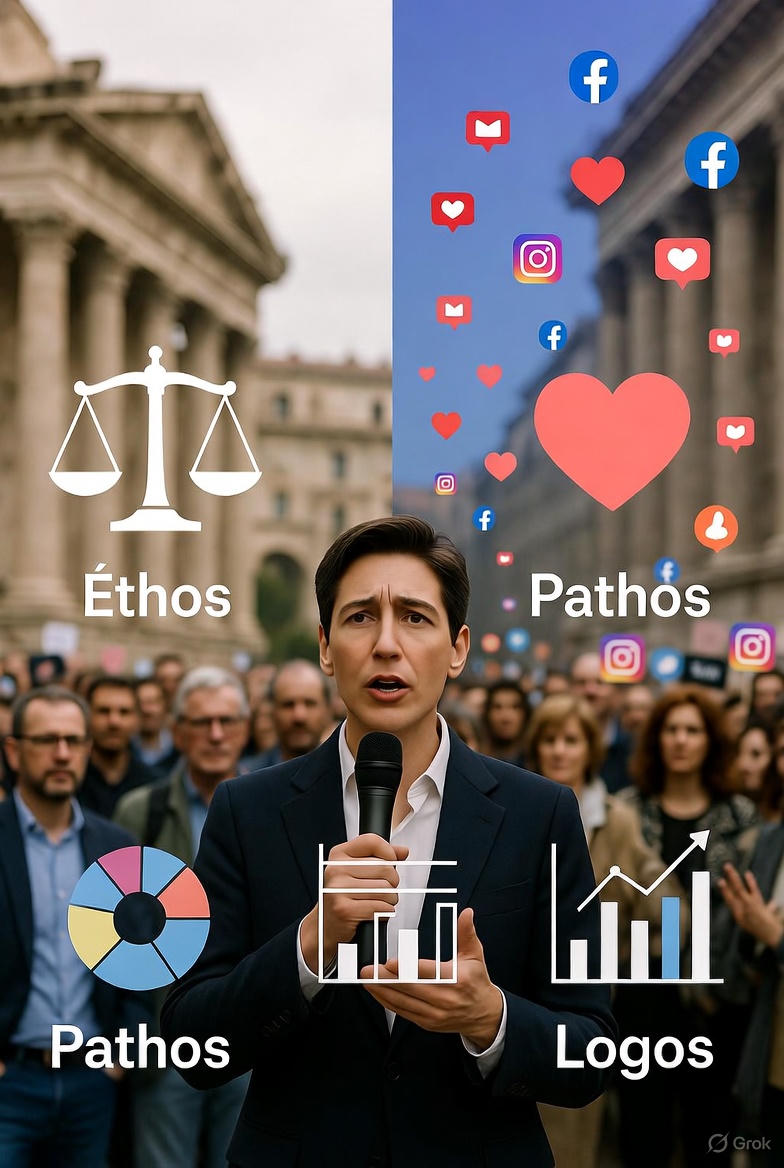
    In a world where ideas compete for attention, the ability to persuade others stands as one of the most potent tools for success. Whether closing a business deal, rallying support for a cause, or simply convincing a friend to try a new restaurant, persuasion shapes outcomes and drives change. But what makes persuasion so powerful? At its core, it’s the art of influencing thoughts, feelings, and actions through communication, psychology, and strategy. Far from manipulation, ethical persuasion builds trust and fosters mutual benefit. This article explores the foundations, principles, real-world applications, and ethical boundaries of persuasion, revealing how mastering it can transform your personal and professional life.

    The roots of persuasion trace back to ancient times. Aristotle, the Greek philosopher, outlined its essentials in his work *Rhetoric* over 2,300 years ago. He identified three modes: ethos (credibility), pathos (emotion), and logos (logic). Ethos establishes the speaker’s authority—why should anyone listen to you? Pathos taps into emotions, making arguments resonate on a human level. Logos relies on facts and reasoning to build a solid case. These pillars remain relevant today, forming the backbone of everything from courtroom arguments to viral marketing campaigns.

    Fast-forward to the modern era, and psychologist Robert Cialdini has become the go-to expert on persuasion. In his seminal book *Influence: The Psychology of Persuasion*, first published in 1984 and updated in recent years, Cialdini distills decades of research into six key principles: reciprocity, scarcity, authority, consistency, liking, and social proof. These aren’t just abstract concepts; they’re wired into human behavior, evolved from our social instincts.

    Reciprocity is perhaps the simplest yet most effective. People feel compelled to return favors. Think of free samples at a grocery store—they’re not just generous; they’re a calculated move to encourage purchases. In business, offering value upfront, like a free consultation or ebook, primes clients to reciprocate with their business. Scarcity leverages our fear of missing out. Limited-time offers or “only a few left in stock” messages on e-commerce sites create urgency, boosting sales. Authority taps into our trust in experts; endorsements from doctors or celebrities lend credibility to products.

    Consistency draws on our desire to align actions with commitments. Once someone agrees to a small request, they’re more likely to say yes to a larger one—a technique called the “foot-in-the-door” method. Liking reminds us that we’re more persuadable by people we admire or relate to. Charismatic leaders or influencers build rapport through shared interests or compliments. Finally, social proof shows that we look to others for cues; reviews, testimonials, and crowd behavior sway decisions, as seen in the rapid spread of trends on social media.

    These principles aren’t confined to theory—they power real-world triumphs and pitfalls. In politics, persuasion can sway elections. Consider Barack Obama’s 2008 campaign, which masterfully used social proof and liking. His slogan “Yes We Can” fostered a sense of collective momentum, while his relatable persona—sharing stories of his upbringing—built emotional connections. On the flip side, misinformation campaigns, like those during the 2016 U.S. election, exploited authority by spreading fake endorsements, highlighting persuasion’s darker potential.

    In business, companies like Apple excel at persuasion. Steve Jobs’ product launches weren’t mere announcements; they were theatrical events blending logos (innovative features), pathos (aspirational storytelling), and ethos (Jobs’ visionary status). The result? Lines around stores and billions in revenue. Marketing giants like Coca-Cola use reciprocity in holiday ads, evoking warmth and nostalgia to associate their brand with joy, encouraging loyalty.

    Everyday life offers countless examples too. Parents persuade children to eat vegetables by appealing to authority (“Doctors say it’s good for you”) or scarcity (“This is the last piece!”). In negotiations, salespeople use consistency by getting buyers to verbalize preferences early, making it harder to back out later. Even in relationships, persuasion helps resolve conflicts—framing requests with empathy (pathos) and evidence (logos) can turn arguments into agreements.

    But why does persuasion work so well? Psychology provides clues. Our brains are wired for efficiency, relying on heuristics—mental shortcuts—to make quick decisions. In a fast-paced world overloaded with information, we can’t analyze everything deeply, so we default to trust signals like authority or social proof. Neuroscientist Antonio Damasio’s research shows emotions play a crucial role; without them, logical decision-making falters. Persuasion hijacks these processes, guiding choices subtly.

    Yet, this power demands responsibility. The line between persuasion and manipulation blurs when intent shifts from mutual gain to exploitation. Ethical persuasion respects autonomy, provides accurate information, and avoids coercion. For instance, in advertising, the Federal Trade Commission regulates deceptive claims to protect consumers. Unethical uses, like cult leaders employing scarcity and authority to control followers, demonstrate the risks. History is rife with examples: Adolf Hitler’s propaganda machine used repetition (a form of social proof) and emotional appeals to tragic ends.

    To wield persuasion ethically and effectively, one must develop skills. Start with self-awareness—understand your biases and motivations. Active listening builds rapport, showing respect and uncovering others’ needs. Tailor messages: What resonates with a data-driven executive might bore a creative artist. Practice storytelling; narratives engage pathos better than dry facts. For logos, back claims with evidence—statistics, studies, or analogies.

    Building ethos requires consistency and expertise. Share credentials humbly, and demonstrate reliability through actions. To harness liking, find common ground—mirroring body language or using inclusive language like “we” fosters connection. For social proof, highlight genuine testimonials, not fabricated ones.

    Training can accelerate mastery. Toastmasters International offers public speaking practice, emphasizing Aristotle’s modes. Books like Cialdini’s, or Dale Carnegie’s *How to Win Friends and Influence People*, provide timeless advice. Online courses on platforms like Coursera cover negotiation and influence, often drawing from behavioral economics.

    In today’s digital age, persuasion evolves. Social media amplifies reach but demands authenticity—fake influence erodes trust quickly. Algorithms favor engaging content, rewarding persuasive posts with visibility. Influencers like MrBeast use scarcity (limited merch drops) and reciprocity (giveaways) to build empires. AI tools, like chatbots, persuade through personalized recommendations, raising new ethical questions about transparency.

    The power of persuasion extends to societal change. Activists like Martin Luther King Jr. used pathos in speeches like “I Have a Dream,” painting vivid emotional pictures while grounding them in moral authority. Environmental campaigns, such as those by Greta Thunberg, leverage social proof through global strikes, pressuring leaders.

    Ultimately, persuasion empowers individuals to lead, innovate, and connect. It turns ideas into movements, products into successes, and conflicts into collaborations. But its strength lies in balance—use it to uplift, not deceive. As you navigate life’s interactions, remember: True persuasion isn’t about winning arguments; it’s about creating win-win scenarios.

    By honing these skills, anyone can amplify their impact. Start small—persuade a colleague to adopt your idea, or convince yourself to pursue a goal. The ripple effects can be profound, proving that in a connected world, the power to persuade is the power to shape destiny.

  • How to Stop Bad Habits and Replace Them with Good Ones

    How to Stop Bad Habits and Replace Them with Good Ones

    How to Stop Bad Habits and Replace Them with Good Ones: A Practical, Science-Backed Guide

    Bad habits feel unbreakable because they *are* well-engineered neurological shortcuts. Every time you scroll social media for “just five minutes” and emerge an hour later, or reach for junk food when stressed, your brain is quietly rewarding itself with a hit of dopamine while strengthening a neural pathway. The good news: the same plasticity that built the bad habit can dismantle it and install a better one. Modern habit science—drawn from researchers like Wendy Wood, BJ Fogg, James Clear, and Charles Duhigg—shows that willpower alone is a terrible tool. Environment, identity, and tiny adjustments work far better.

    Here’s a step-by-step system that actually works.

    1. Understand the Habit Loop (Cue → Craving → Response → Reward)


    Charles Duhigg popularized this model in *The Power of Habit*, but it originates from decades of research at MIT and elsewhere. Every habit has four parts:

    – Cue: the trigger (time, location, emotion, preceding action, or person)
    – Craving: the motivational spark (you don’t crave cigarette smoke; you crave the calm it temporarily delivers)
    – Response: the actual behavior
    – Reward: the payoff that reinforces the loop

    To change a habit, you must work with this loop, not against it.

    2. Identify Your Bad Habit with Brutal Specificity

    Vague goals (“I want to stop procrastinating”) fail. Write down the exact habit in the format:
    “When ____ happens, I will ____ instead of my old behavior.”

    Examples:
    – “When I sit on the couch after dinner (cue), I pick up my phone (old response).”
    – “When I feel anxious at my desk (cue), I open YouTube (old response).”

    3. Make the Bad Habit Hard (Friction) and the Good Habit Easy (Reduce Friction)


    Wendy Wood’s research at USC shows that **friction** is the single biggest predictor of behavior.

    To stop a bad habit:
    – Phone addiction: Put your phone in another room, turn on grayscale mode, log out of apps, use app blockers (Freedom, Opal, OneSec).
    – Late-night snacking: Don’t keep trigger foods in the house or tape the cabinet shut with a note that says “Do 20 push-ups first.”
    – Impulse online shopping: Remove saved credit cards, add a 30-second delay extension, make yourself walk to the desktop instead of using the phone.

    To start a good habit:
    – Want to read 20 pages every night? Place the book on your pillow in the morning.
    – Want to meditate? Put a cushion next to your bed and set a 60-second timer as the starter goal (BJ Fogg’s “Tiny Habits” method).
    – Want to exercise? Sleep in your gym clothes.

    4. Replace, Don’t Just Remove (The Keystone of Lasting Change)


    Your brain hates a vacuum. If you only remove the bad habit, the craving remains and you’ll relapse. Give it a new response that satisfies the *same* craving.

    Examples:
    – Craving distraction from work stress → Old: Open Reddit → New: Do 10 deep breaths + 20 jumping jacks (still a break, still dopamine).
    – Craving something crunchy at 3 p.m. → Old: Chips → New: Baby carrots + hot sauce or roasted chickpeas.
    – Craving comfort after a bad day → Old: Glass of wine → New: Herbal tea in a fancy glass + 5-minute stretching video.

    James Clear calls this “habit stacking with substitution”: keep the cue and reward, change the response.

    5. Use Identity-Based Change (Become the Kind of Person…)


    In *Atomic Habits*, Clear argues the most powerful shifts come from identity, not outcomes.

    Instead of “I want to quit smoking,” try “I’m not a smoker.”
    Instead of “I need to eat healthier,” try “I’m someone who nourishes my body.”

    Every time you’re tempted, the question shifts from “Do I feel like doing this?” to “Is this behavior consistent with the person I’ve decided to be?” Identity beats motivation long-term.

    6. Track It Visibly (The Power of Streaks and Measurement)


    What gets measured gets managed. Use a simple wall calendar and a red marker (the “Seinfeld Strategy”) or apps like Habitica, Streaks, or Way of Life. The goal is not perfection—missed days happen—but to make the chain too visually beautiful to break.

    Research by Benjamin Harkin (2016 meta-analysis) found that people who monitor their behavior are 2–3 times more likely to succeed.

    7. Plan for Failure (Implementation Intentions + If/Then Planning)


    Gollwitzer’s research on implementation intentions shows that a simple “If X, then Y” plan dramatically increases success.

    Examples:
    – “If I crave a cigarette after lunch, then I will chew gum and walk around the block.”
    – “If I’m tempted to skip the gym, then I’ll at least put on my workout clothes and do five push-ups—no negotiation.”

    Have a relapse plan too: “If I binge on social media for more than 30 minutes, I’ll immediately close the app and write down what emotion I was avoiding.”

    8. Optimize Your Environment and Social Circle


    You are the average of the five people (and five places) you spend the most time with.

    – Join a running group if you want to run consistently.
    – Tell your partner or roommate your goal so they can gently call you out.
    – Unfollow triggering accounts; follow accounts that inspire the new behavior.

    9. Use Reward Substitution Early, Then Fade It


    New habits don’t feel good at first—the dopamine payoff is delayed. Give yourself an immediate reward for the first 2–4 weeks:

    – After a workout → favorite podcast only allowed in the gym.
    – After writing 500 words → fancy coffee.
    – After meditating → sticker on a chart (yes, adults love stickers).

    Once the habit is automatic (usually 66 days on average, per Lally et al., 2010), drop the external reward.

    10. Review Weekly (The 10-Minute Sunday Ritual)


    Every Sunday, spend 10 minutes asking:
    1. Which cues triggered my old habit this week?
    2. Which new responses worked best?
    3. What one tweak will I make next week?

    Treat habit change like software development: iterate quickly.

    Final Thought: Progress, Not Perfection


    Relapse is data, not moral failure. The people who succeed long-term aren’t the ones who never slip; they’re the ones who get back on track fastest. As Stanford’s BJ Fogg says, “Plant a tiny seed in the right spot and it will grow without coaxing.”

    Start smaller than you think you need to. A two-minute meditation, one push-up, one glass of water first thing in the morning—these “ridiculously small” actions are the compound interest of self-improvement.

    You don’t need more willpower. You need a better system. Build it one friction adjustment, one replacement, and one identity statement at a time—and the person you want to become will show up almost without effort.