
Developing Emotional Intelligence for Success
Have you ever wondered why some people seem to climb the ladder of success effortlessly while others struggle, even with all the skills and smarts? It’s not just about IQ or hard work. A big part of it comes down to something called emotional intelligence. Developing emotional intelligence can change the game for anyone chasing success in their career, relationships, or personal goals. In this post, we’ll dive deep into what emotional intelligence really means, why it matters, and how you can start building it step by step.
Emotional intelligence isn’t some fancy buzzword—it’s a practical skill set that helps you understand your own emotions and those of others. By focusing on developing emotional intelligence, you’ll handle stress better, build stronger teams, and make smarter decisions. Let’s break it down.
What Is Emotional Intelligence?
Emotional intelligence, often shortened to EI or EQ, is the ability to recognize, understand, and manage our own emotions, as well as the emotions of people around us. It was popularized by psychologist Daniel Goleman in the 1990s, and since then, it’s become a key topic in books, workshops, and leadership training.
Think of EI as your emotional GPS. It guides you through tough conversations, helps you stay calm under pressure, and lets you connect with others on a real level. Unlike your IQ, which is mostly fixed, developing emotional intelligence is something you can work on throughout your life.
There are four main parts to emotional intelligence: self-awareness, self-management, social awareness, and relationship management. Each one plays a role in how you navigate life’s ups and downs. For success in business or personal life, mastering these can give you an edge that raw talent can’t match.
Self-awareness is about knowing your emotional triggers. Self-management means controlling those feelings without letting them run wild. Social awareness helps you read the room—like sensing when a colleague is stressed. And relationship management is all about building and maintaining healthy connections.
If you’re new to this, don’t worry. Developing emotional intelligence starts with simple habits, like pausing to reflect on your day or listening more in meetings.
Why Developing Emotional Intelligence Leads to Success
Success isn’t just about hitting targets or making money. It’s about thriving in every area—work, family, health. Studies show that people with high emotional intelligence earn more, get promoted faster, and report higher job satisfaction. A report from the World Economic Forum even lists EI as one of the top skills for the future workforce.
In today’s fast-paced world, where teams are remote and changes happen overnight, developing emotional intelligence helps you adapt. Leaders with strong EI inspire trust and boost morale. Employees who get it handle conflicts without drama, leading to smoother projects.
Take sales, for example. A salesperson with high EI reads customer cues and builds rapport, closing deals that others might miss. In management, it’s about motivating a diverse team, where understanding cultural emotions makes all the difference.
Personal success ties in too. Better EI means less burnout, stronger partnerships, and more fulfillment. When you invest in developing emotional intelligence, you’re not just fixing problems—you’re setting yourself up for a happier, more effective life.
Research backs this up. Harvard Business Review articles highlight how EI predicts 58% of performance in all job types. So, if success is your goal, start here.
The Science Behind EI and Achievement
Brain science explains why. Our emotions are wired through the limbic system, influencing decisions before logic kicks in. Developing emotional intelligence rewires those pathways, making you more rational under stress.
Neuroplasticity means your brain can change. Practices like mindfulness build EI over time, leading to real success metrics like higher income or better health.
Building Self-Awareness: Know Yourself First
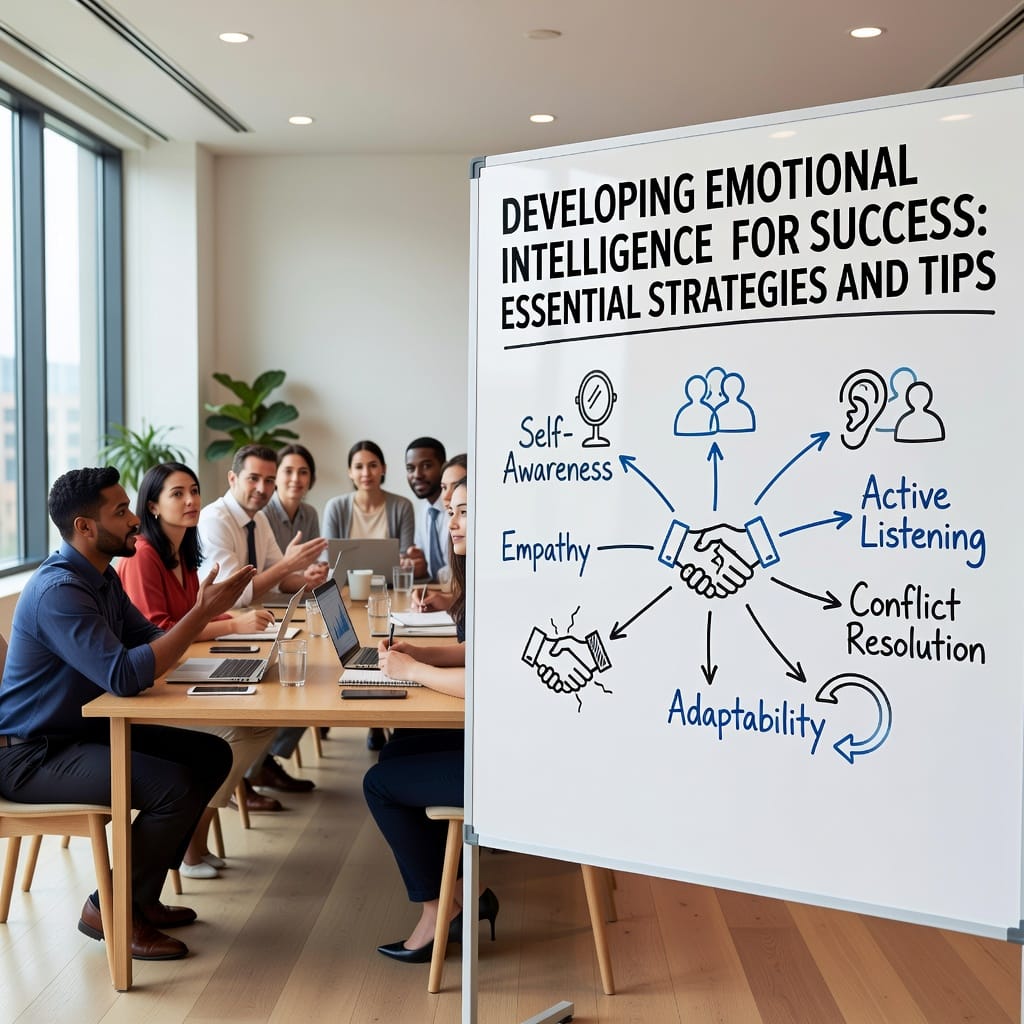
Self-awareness is the cornerstone of developing emotional intelligence. It’s about tuning into your inner world—your feelings, strengths, and weaknesses. Without it, you’re flying blind.
Start by journaling. Each evening, write down three things: what you felt today, why, and how it affected your actions. This habit uncovers patterns, like how frustration derails your focus.
Ask for feedback. Trusted friends or colleagues can point out blind spots. Say, “What do you think I could improve in meetings?” It stings at first, but it’s gold for growth.
Meditate daily. Even five minutes helps you observe thoughts without judgment. Apps like Headspace make it easy for beginners.
In the workplace, self-awareness shines. A manager who knows their temper helps avoid snap decisions, fostering a positive team vibe.
Remember, developing emotional intelligence through self-awareness isn’t overnight. Be patient—small steps lead to big insights.
Tools to Boost Self-Awareness
- Emotional Check-Ins: Pause hourly and rate your mood on a scale. It builds the muscle of noticing emotions.
- Personality Assessments: Try the Myers-Briggs or DISC profile. They reveal how you interact, aiding EI development.
- Books for Deeper Dive: Pick up Emotional Intelligence by Daniel Goleman for proven strategies. You can grab it here on Amazon—it’s a classic that transformed how we think about success.
These tools make developing emotional intelligence feel achievable.
Mastering Self-Management: Keep Emotions in Check
Once you know your emotions, the next step in developing emotional intelligence is managing them. Self-management is like being the driver of your emotional car—not the passenger.
Impulses are normal, but unchecked, they sabotage success. Think road rage or snapping at a boss. Good self-management turns those into calm responses.
Breathe through it. The 4-7-8 technique—inhale for 4, hold for 7, exhale for 8—resets your stress in seconds.
Set boundaries. Learn to say no without guilt. This preserves energy for what matters, key to long-term success.
Practice optimism. Reframe setbacks: “This delay teaches patience” instead of “Everything’s ruined.” It builds resilience.
At work, self-management means meeting deadlines despite chaos. Leaders who model this create cultures where teams thrive.
Developing emotional intelligence here takes practice. Track wins, like handling a tough call without yelling. Celebrate progress.
Everyday Habits for Better Control
- Exercise regularly—endorphins regulate mood.
- Sleep well—fatigue amps emotions.
- Visualize success—imagine calm reactions to triggers.
These keep you steady, propelling you toward goals.
Enhancing Social Awareness: Read the Emotional Room
Social awareness means empathizing with others. It’s a vital piece of developing emotional intelligence for success, especially in collaborative settings.
Start by listening actively. Put away distractions and focus on words, tone, and body language. Nod to show you’re engaged.
Observe nonverbal cues. Crossed arms might mean defensiveness; a smile, openness. This helps in negotiations or friendships.
Put yourself in their shoes. Ask, “How would I feel?” before responding. It diffuses tension.
In teams, high social awareness spots burnout early. A supervisor noticing low energy can intervene, boosting productivity.
For global workforces, cultural sensitivity matters. Learning about diverse emotional expressions strengthens bonds.
Developing emotional intelligence socially builds networks that last. It’s how referrals and partnerships happen.
Empathy Exercises to Try
- Role-play scenarios with a buddy.
- Watch emotional movies and discuss feelings.
- Volunteer—real-world interactions hone this skill.
These make you a go-to person for advice and collaboration.
Strengthening Relationship Management: Build Lasting Connections
The final pillar of developing emotional intelligence is relationship management. It’s about using awareness to nurture ties that support success.
Communication is key. Be clear and kind, using “I” statements like “I feel overwhelmed when…” to avoid blame.
Resolve conflicts constructively. Focus on issues, not people. Find win-win solutions.
Inspire others. Share vision and recognize efforts. This motivates teams and opens doors.
Networking counts too. Follow up after events with genuine interest, not just asks.
At home, it means deeper bonds; at work, promotions through allies.
Developing emotional intelligence in relationships turns acquaintances into advocates. Success follows naturally.
For more on team dynamics, check our post on developing leadership skills. It’s packed with tips that tie right into EI.
Tips for Networking with EI
- Attend events with curiosity.
- Give before you get—offer help first.
- Follow through on promises.
These habits create a success web.
Emotional Intelligence in the Workplace
Developing emotional intelligence transforms careers. In high-stakes jobs like healthcare or finance, EI prevents errors from emotional overload.
For entrepreneurs, it means pitching confidently, reading investor vibes.
Remote work amps the need—video calls miss cues, so overcompensate with check-ins.
Companies invest in EI training because it cuts turnover. A study by TalentSmart found top performers have 90% higher EI.
If you’re climbing the ladder, weave EI into your resume. Phrases like “managed team emotions during crunch time” stand out.
See our portfolio on executive coaching for real examples of how we help pros build this skill.
Overcoming Common Barriers to Developing Emotional Intelligence
Everyone hits roadblocks. Stress, skepticism, or time shortages can stall progress.
Combat doubt by starting small. One habit a month builds momentum.
Time-crunched? Integrate EI into routines—like mindful commutes.
Old habits die hard. Accountability partners keep you on track.
Cultural stigmas, like “emotions are weak,” hold some back. Reframe: EI is strength.
With persistence, barriers crumble, unlocking success.
Strategies for Busy Lives
- Micro-meditations under commutes.
- Audio books on the go.
- Weekly reflection emails from apps.
These fit anywhere.
Measuring Your Progress in Emotional Intelligence
How do you know it’s working? Track changes.
Journals show emotional shifts. Less reactivity? Win.
Feedback loops: Ask monthly, “Am I more approachable?”
Quizzes like the EQ-i 2.0 give scores. Retest yearly.
Success markers: Better relationships, promotions, inner peace.
Celebrate milestones. Treat yourself for consistency.
Developing emotional intelligence is ongoing. Like fitness, it pays dividends long-term.
Real-Life Stories of EI Success
Meet Sarah, a mid-level manager stuck in ruts. By developing emotional intelligence via journaling and empathy training, she led a turnaround project, earning a promotion.
Then there’s Mike, an engineer shy in meetings. Self-management techniques helped him speak up, landing key clients.
These aren’t outliers. Thousands transform through EI focus.
Inspired? Our coaching has similar stories. Dive into developing emotional intelligence and watch doors open.
As you apply these steps, you’ll notice shifts. Conversations flow easier, stress fades, achievements stack up. It’s not magic—it’s emotional smarts at work. Keep at it, and success becomes your new normal.