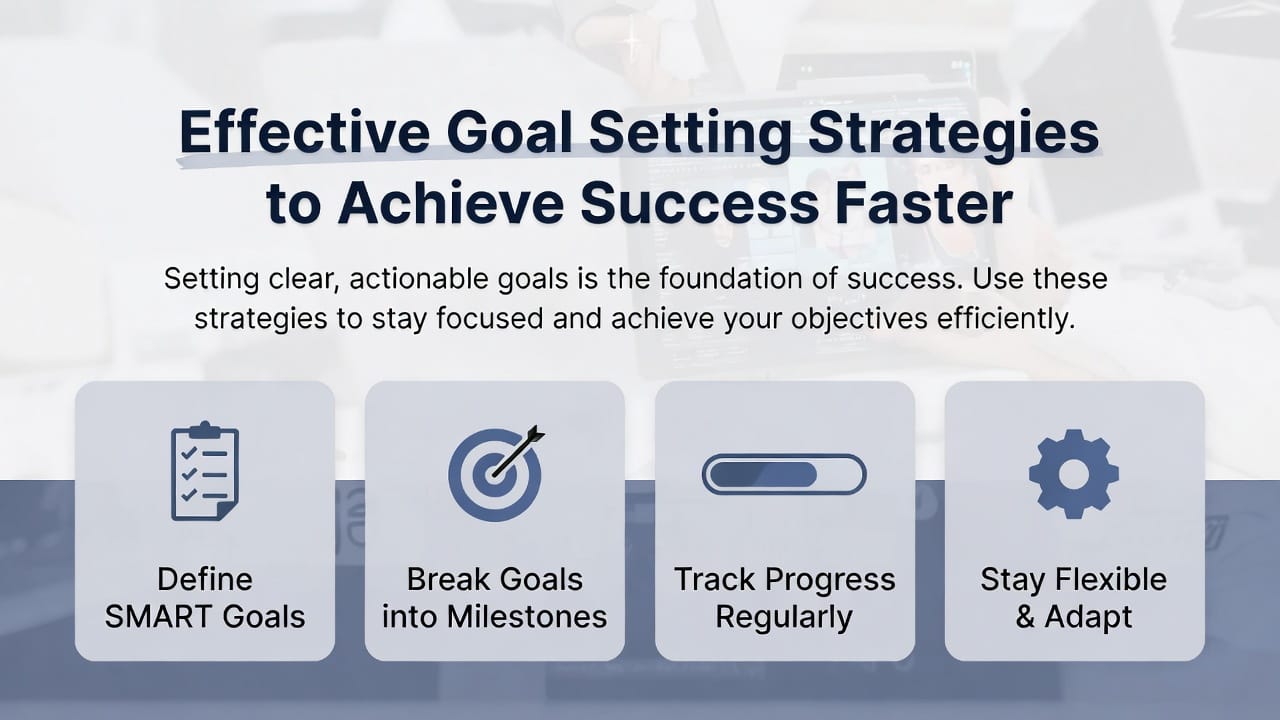
Goal Setting Strategies: Unlock Your Potential with Proven Techniques
Goal setting is the foundation of success. Whether you’re aiming to advance your career, improve your health, or launch a side hustle, clear goals provide direction and motivation. Yet, many people set vague intentions that fizzle out quickly. The key lies in using structured strategies that turn dreams into reality.
In this post, we’ll explore five powerful goal-setting strategies backed by psychology and real-world success stories. From the classic SMART framework to innovative methods like OKRs and backward planning, you’ll gain actionable tools to set and achieve goals effectively. By the end, you’ll have a toolkit to supercharge your productivity and fulfillment.
Why Goal Setting Works: The Science Behind It
Before diving into strategies, understand why goals matter. Research from psychologist Edwin Locke shows that specific, challenging goals lead to higher performance than vague ones. Goals activate the brain’s reticular activating system (RAS), filtering distractions and focusing attention.
A study in the American Journal of Health Promotion found that people who wrote down goals were 42% more likely to achieve them. Goals also boost dopamine, creating a reward loop that sustains motivation.
However, not all goals are equal. Poorly crafted ones lead to frustration. That’s where proven strategies come in—they make goals concrete, trackable, and resilient.
Strategy 1: SMART Goals – The Timeless Framework
SMART goals have been a staple since the 1980s, popularized by George T. Doran. SMART stands for Specific, Measurable, Achievable, Relevant, and Time-bound. This acronym ensures goals are clear and actionable.
Breaking Down SMART
- Specific: Avoid vagueness. Instead of “get fit,” say “run 5km three times a week.”
- Measurable: Track progress. “Lose 10 pounds” beats “lose weight.”
- Achievable: Realistic yet challenging. If you’re a beginner runner, don’t aim for a marathon first week.
- Relevant: Align with bigger picture. Does this goal support your career or values?
- Time-bound: Set deadlines. “By December 31st” creates urgency.
Example: Sarah, a marketing manager, wanted a promotion. Her vague goal: “Work harder.” SMART version: “Complete two advanced certifications (Google Analytics and HubSpot) and lead one client project by Q4 end, tracking via monthly progress reports.”
Result? Sarah tracked weekly study hours, stayed motivated, and earned the promotion. SMART reduces overwhelm by chunking big ambitions into bite-sized steps.
Use this checklist for your next goal:
- Is it specific? (Who, what, where, why?)
- How will you measure success?
- Is it realistic with your resources?
- Does it matter to you long-term?
- What’s the deadline?
Strategy 2: OKRs – Scale Like Tech Giants
Objectives and Key Results (OKRs) powered companies like Google and Intel to explosive growth. Coined by Andy Grove, OKRs pair ambitious Objectives (inspirational goals) with Key Results (measurable outcomes).
Objectives are qualitative and bold: “Revolutionize personal fitness tracking.”
Key Results are 3-5 quantifiable metrics:
- Achieve 10,000 app downloads.
- Attain 4.5+ App Store rating.
- Secure partnerships with two gyms.
OKRs shine for teams but work individually too. They encourage stretch goals—aim 70-80% achievement for growth.
Real-World Example: Intel’s OKR for microprocessors: Objective—“Dominate the PC chip market.” Key Results: 90% market share, $1B revenue, beat competitors by 20% performance.
For personal use, Brian, a freelancer, set: Objective—“Build a thriving online course business.” Key Results: Launch course (done), 500 enrollments (hit 400), $20K revenue (achieved $18K). The partial success fueled iteration.
Quarterly reviews keep OKRs dynamic. Tools like Google Sheets or apps like Weekdone simplify tracking.
Strategy 3: Backward Goal Setting – Start from the Finish Line
Most people plan forward: “Step 1, Step 2…” But backward planning, from Elon Musk’s playbook, reverses this. Visualize the end goal, then work backward to today.
Why it works: It clarifies prerequisites and reveals hidden obstacles early.
How to Do It:
- Define the exact end state: “What does success look like?”
- Ask: “What must happen immediately before?”
- Repeat until you reach now.
- Add milestones and deadlines.
Example: Preparing for a marathon. Forward: Train daily (overwhelming). Backward:
- Race day: Cross finish line.
- One month prior: Run 20km training race.
- Three months prior: Consistent 50km/week.
- Now: Buy shoes, join a running group.
Marissa used this for her novel. End: Published book. Backward: Query agents (Month 12), Edit draft (Month 9), Write 1,000 words/day (starting today). She finished in 11 months.
This method builds confidence by making the path feel inevitable.
Strategy 4: Habit Stacking and the Power of Small Wins
James Clear’s Atomic Habits emphasizes systems over goals. Pair goals with “habit stacking”—attach new behaviors to existing routines.
Small wins compound via the “progress principle” (Teresa Amabile’s research), releasing dopamine for momentum.
Habit Stacking Formula: “After [current habit], I will [new habit].”
Examples:
- Fitness: “After brushing teeth, do 10 push-ups.”
- Learning: “After coffee, read two pages of a skill book.”
- Productivity: “After lunch, plan tomorrow’s top three tasks.”
Track with apps like Habitica or Streaks. Celebrate micro-victories to rewire your brain.
Case Study: Tom wanted to read 50 books yearly. Instead of “read more,” he stacked: “After dinner, read for 20 minutes.” By year’s end: 52 books, plus deeper knowledge.
Combine with the “2-Minute Rule”: Scale habits tiny to bypass resistance.
Strategy 5: Accountability and Visualization
Solo goals often fail—76% per a Dominican University study. Boost odds with accountability.
Methods:
- Accountability Partners: Weekly check-ins. Apps like StickK let you bet money on failure.
- Public Commitment: Post on social media or join masterminds.
- Visualization: Daily 5-minute mental rehearsals. Athletes like Michael Phelps used this.
Example: A sales team visualized closing deals nightly, boosting quotas by 25%. Pair with journaling: “What went well? What to adjust?”
Overcoming Common Goal-Setting Pitfalls
Even great strategies falter without vigilance.
- Pitfall: Overcommitment. Solution: Prioritize 3 goals max.
- Pitfall: Perfectionism. Embrace “good enough” progress.
- Pitfall: Lack of Flexibility. Review monthly; pivot as needed.
- Pro Tip: Use the WOOP method (Wish, Outcome, Obstacle, Plan) to preempt hurdles.
| Pitfall | Strategy Fix |
|---|---|
| Vague goals | Apply SMART |
| No motivation | Add visualization |
| Burnout | Focus on habits |
| Isolation | Seek accountability |
Conclusion
Mastering goal-setting strategies like SMART, OKRs, backward planning, habit stacking, and accountability transforms aspirations into achievements. Start small: Pick one strategy, apply it to a goal today, and track progress. Consistency compounds—your future self will thank you. What’s your first goal? Set it now and watch the momentum build.
Infinite Power Consulting – Where Potential Meets Possibility