Navigating Grief and Loss with a Positive Mindset
Losing someone or something important can feel like the world stops turning. It’s that deep ache in your chest, the questions that loop in your mind without answers. Grief isn’t just sadness—it’s a storm that touches every part of life. But what if you could steer through that storm with a bit more light? That’s where a positive mindset comes in. It’s not about pretending the pain isn’t real; it’s about finding ways to hold onto hope amid the hurt.
I’ve walked this path myself, and I’ve seen others do it too. In this post, we’ll explore how to navigate grief and loss through a positive mindset. We’ll talk about the stages of grief, practical steps to shift your thinking, and real stories that show it’s possible to find joy again. If you’re here because of your own loss, know that you’re not alone. Let’s take this journey together, one step at a time.
What Grief and Loss Really Feel Like
Grief shows up differently for everyone. For some, it’s waves of tears that come out of nowhere. For others, it’s anger bubbling up or a numbness that makes daily tasks feel impossible. Loss isn’t only about death—it can be the end of a relationship, a job, or even a dream you held dear.
Think about it: when we lose something vital, it shakes our sense of security. Our brains go into survival mode, replaying what-ifs and whys. But understanding this can be the first step in navigating grief. It’s normal to feel lost, but recognizing it as a process helps you start rebuilding.
I remember when I lost my best friend unexpectedly. The world seemed gray for months. Simple things like laughing at a joke felt wrong. Yet, slowly, I learned that grief evolves. It doesn’t vanish, but it changes shape. A positive mindset enters here—not to erase the pain, but to make space for healing.
The Stages of Grief: A Roadmap, Not a Rulebook
You’ve probably heard of the five stages: denial, anger, bargaining, depression, and acceptance. Elisabeth Kübler-Ross introduced them, but they’re not a strict order. You might skip some or cycle back. The key is to let yourself feel without judgment.
In denial, you might think, “This can’t be happening.” Anger follows: “Why me?” Bargaining is that desperate wish: “If only I’d done this differently.” Depression hits hard, with exhaustion and isolation. Finally, acceptance brings a quiet peace, though the loss lingers.
Navigating these with a positive mindset means viewing them as visitors, not permanent residents. Journaling your feelings can help. Write down one thing you’re grateful for each day, even if it’s small like a warm cup of coffee. This practice rewires your brain toward positivity, easing the grip of grief.
Why a Positive Mindset Matters in Healing
A positive mindset isn’t fluffy thinking—it’s a tool backed by science. Studies from positive psychology show that focusing on strengths and possibilities reduces stress hormones and boosts resilience. When you’re grieving, this shift can prevent the pain from defining you.
Imagine grief as a heavy backpack. A negative mindset adds more weight with thoughts like “I’ll never be happy again.” But positivity lightens the load by reminding you of past comebacks. It’s about balance: honoring the loss while opening to new growth.
Research from the American Psychological Association highlights how optimism correlates with better health outcomes during bereavement. People with a positive outlook report less prolonged grief and faster emotional recovery. So, cultivating this mindset isn’t selfish—it’s essential for navigating loss.
The Science Behind Positivity and Grief
Our brains are wired for negativity bias—it’s an old survival trick. But neuroplasticity means we can train it otherwise. Practices like mindfulness rewire neural pathways, making positive thoughts more automatic.
In one study, participants who practiced gratitude daily saw a 25% drop in depressive symptoms after loss. It’s simple: what you focus on grows. Shift from “What did I lose?” to “What can I still cherish?” This doesn’t dismiss the hurt; it coexists with it, creating room for hope.
Building a Positive Mindset: Practical Steps
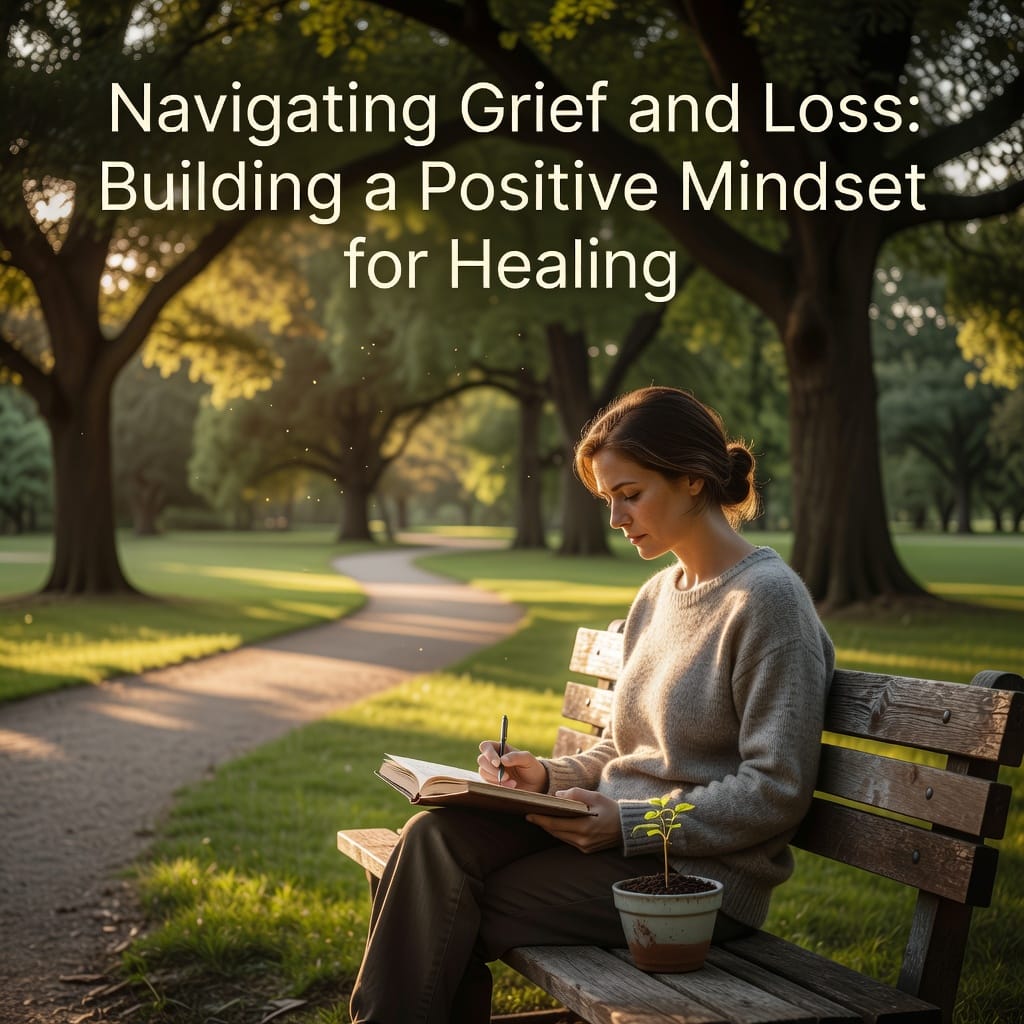
Ready to start? Building a positive mindset takes intention, especially in grief. Begin small—no need for overnight miracles. Here are steps that have helped many, including me.
First, surround yourself with support. Talk to friends, join a group, or seek therapy. Sharing lightens the burden and reminds you others care.
Second, move your body. A walk in nature can clear mental fog. Exercise releases endorphins, nature’s mood boosters.
Third, practice self-compassion. Grief can make you hard on yourself. Speak kindly, as you would to a friend. “It’s okay to feel this way” goes a long way.
Daily Habits to Foster Positivity
Let’s break it down into actionable habits:
Gratitude Journaling: Each night, note three things that brought even a tiny spark of joy. Over time, this builds a positive lens.
Affirmations: Start your day with statements like “I am strong, and I will heal.” Say them in the mirror—it feels awkward at first, but it sticks.
Limit Negative Inputs: Curate your media and conversations. Avoid endless doom-scrolling; opt for uplifting podcasts or books.
Set Small Goals: Achieve something tiny, like cooking a favorite meal. Wins build momentum.
These aren’t cures, but they’re anchors in navigating grief and loss through a positive mindset. Track your progress in a notebook to see how far you’ve come.
One client I worked with lost her spouse and felt stuck in anger. We started with walks where she’d name one positive memory per step. Months later, she shared how it transformed her outlook. Small shifts add up.
Stories of Hope: Real People Navigating Loss
Hearing from others makes the path less lonely. Take Sarah, a mother who lost her child to illness. Devastated, she threw herself into advocacy, turning pain into purpose. Her positive mindset focused on honoring her child’s legacy, finding joy in helping others.
Or consider Mike, who navigated job loss during a recession. Instead of despair, he viewed it as a pivot. He took courses, networked, and landed a better role. “Loss taught me resilience,” he says.
These stories show that grief doesn’t end life—it reshapes it. A positive mindset helps spot opportunities in the rubble. For more on resilience, check out our blog post on building emotional strength after setbacks.
In my own experience, losing a parent forced me to confront fears. I started a gratitude ritual, and it opened doors to deeper connections. You’re capable of this too.
Lessons from Those Who’ve Healed
Embrace imperfection: Healing isn’t linear. Some days are tough; that’s okay.
Find meaning: Channel grief into something bigger, like volunteering.
Celebrate progress: Mark milestones, like a month of consistent journaling.
These insights come from real journeys, proving a positive mindset guides you through.
Tools and Resources to Support Your Journey
You don’t have to do this alone. Books, apps, and communities offer guidance.
For a deeper dive, read “On Grief and Grieving” by Elisabeth Kübler-Ross and David Kessler. It’s a compassionate guide to understanding loss. You can find it here on Amazon—a valid link to a timeless resource.
Apps like Calm provide guided meditations for grief. Therapy platforms connect you with counselors specializing in bereavement.
Locally, support groups offer shared stories. And for professional help, explore services like those in our portfolio on holistic grief support.
Integrate these into your routine. A positive mindset thrives with the right tools.
Overcoming Common Challenges in Grief
Even with positivity, hurdles arise. Isolation creeps in, or guilt for feeling better. Acknowledge these without letting them derail you.
When doubt hits, reframe: “This feeling is temporary.” Connect with a trusted person to voice it.
Physical symptoms like fatigue are common. Prioritize sleep, nutrition, and gentle routines. A positive mindset includes caring for your body.
If grief feels overwhelming, professional help is a strength, not weakness. Therapists use cognitive techniques to bolster positivity.
One challenge is societal pressure to “move on.” But healing takes time. Set boundaries: “I’m grateful for your concern, but I’m processing at my pace.”
Long-Term Strategies for Sustained Positivity
As time passes, deepen your practice. Make positivity a lifestyle.
Revisit goals: What dreams did loss pause? Revive them gently.
Build rituals: Weekly reflections on growth foster ongoing hope.
Stay connected to community. Share your story—it inspires others and reinforces your mindset.
Remember, navigating grief and loss through a positive mindset is ongoing. It’s like tending a garden: some days you weed, others you admire blooms.
Embracing a Future Bright with Possibility
You’ve got the tools now—understanding grief, mindset shifts, habits, stories, resources. It’s not about forgetting the loss, but weaving it into a richer life.
Lean on what sparks joy, however small. Laughter will return, connections deepen. You’re resilient, capable of transformation.
Keep going, one positive thought at a time. The light after loss is real, and it’s waiting for you. If this resonates, share your thoughts below or reach out. We’re in this together.