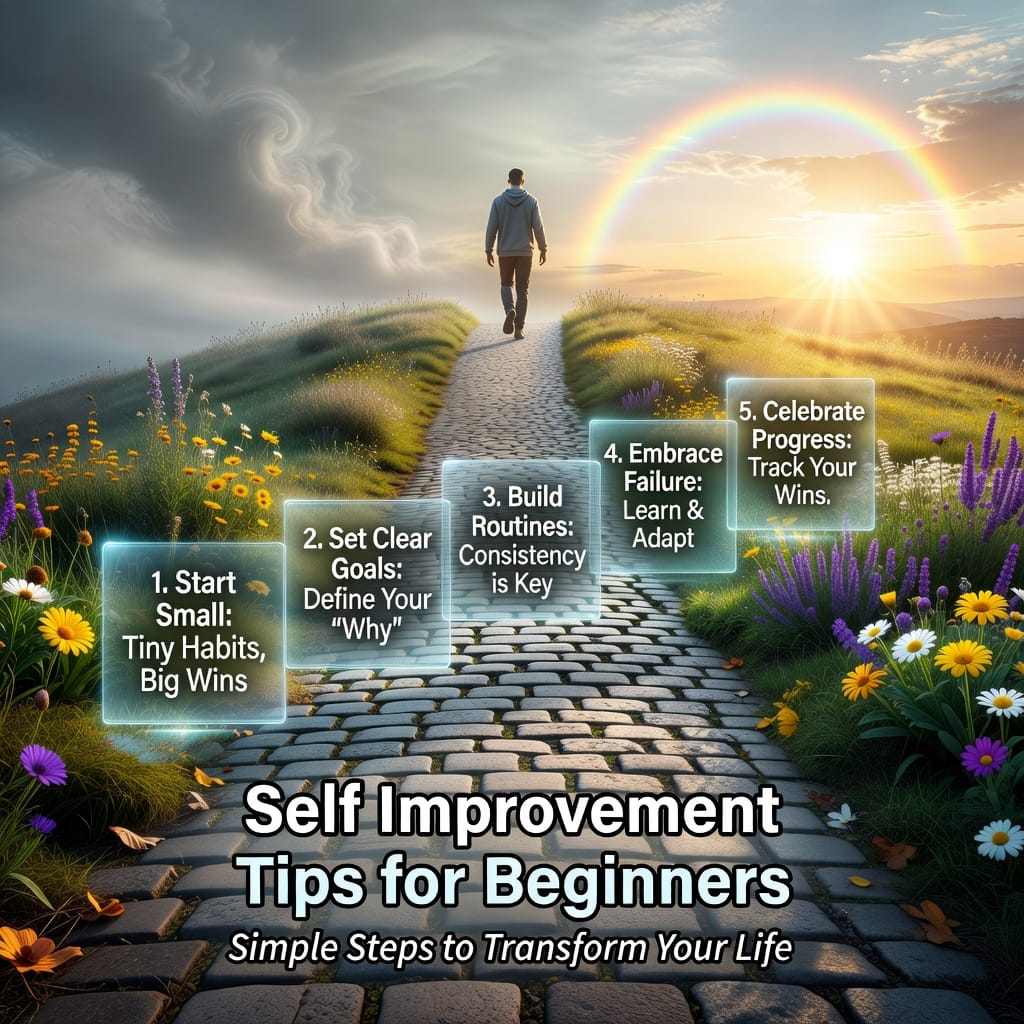
Starting Your Journey with Self Improvement Tips for Beginners
If you’re new to the world of personal growth, it can feel overwhelming at first. That’s why focusing on simple self improvement tips for beginners is the best way to start. You don’t need to overhaul your life overnight. Small, steady changes can lead to big results over time. In this post, we’ll explore practical advice that anyone can apply, no matter where you’re coming from.
Self improvement isn’t about perfection. It’s about becoming a better version of yourself, one step at a time. Whether you’re looking to boost your confidence, get healthier, or manage stress better, these beginner self improvement tips will give you a solid foundation. Let’s dive in and make it straightforward.
Why Self Improvement Matters for Beginners
Starting self improvement as a beginner can transform how you see the world. It helps you build confidence and handle life’s ups and downs more easily. Many people put it off because they think it’s too complicated, but that’s not true. Basic self improvement tips for beginners focus on daily actions that add up.
Think about it: without some level of growth, we can get stuck in routines that don’t serve us. For beginners, the key is awareness. Recognizing areas like time management or emotional health opens the door to positive change. I’ve seen friends who started small, like journaling for five minutes a day, and it snowballed into major life improvements.
Self improvement also boosts happiness. Studies show that working on personal goals releases feel-good chemicals in your brain. As a beginner, you’ll feel motivated when you see progress, even if it’s tiny. This creates a cycle of positivity that’s hard to break.
One big reason to start now? Life doesn’t wait. Delaying self improvement tips for beginners means missing out on years of better living. But the good news is, it’s never too late. Even if you’re in your twenties, thirties, or beyond, these tips work for everyone.
Setting Realistic Goals: The First Step in Beginner Self Improvement

Goals give direction to your self improvement journey. For beginners, the mistake is aiming too high right away. Start small to avoid burnout. Effective self improvement tips for beginners always emphasize realistic targets.
Use the SMART method: Specific, Measurable, Achievable, Relevant, Time-bound. For example, instead of “I want to get fit,” say “I’ll walk 20 minutes three times a week for a month.” This makes it doable and trackable.
Why does this matter? Vague goals lead to frustration. As a beginner in self improvement, tracking progress keeps you motivated. Write your goals in a notebook or app. Review them weekly to adjust as needed.
Here’s a simple list to get started:
- Identify one area: Pick health, career, or relationships first.
- Break it down: Turn big dreams into daily actions.
- Celebrate wins: Reward yourself for hitting milestones, like a favorite treat.
Remember, setbacks happen. If you miss a day, just pick up again. This flexible approach is core to self improvement tips for beginners.
Building Healthy Habits That Stick
Habits are the backbone of lasting change. For those new to self improvement, building them gradually prevents overwhelm. Start with one or two habits, like drinking more water or reading before bed.
Research from Duke University says habits make up 45% of our daily actions. So, focusing on positive ones rewires your routine. Beginner self improvement tips often highlight consistency over intensity. Even five minutes a day builds momentum.
Try habit stacking: Attach a new habit to an existing one. For instance, while brushing your teeth, plan your day. This makes it effortless. Over time, these stack up into a powerful routine.
If you’re struggling, track your habits with a simple chart. Apps like Habitica can gamify it, making self improvement fun for beginners.
For more on this, check out our post on how to build sustainable habits. It dives deeper into techniques that work long-term.
Common beginner pitfalls include going all-in too soon. Instead, focus on enjoyment. If exercising feels like a chore, try dancing to your favorite music. This keeps self improvement tips for beginners engaging.
Improving Your Mindset: Key Self Improvement Tips for Beginners
Your mindset shapes everything. A positive one turns obstacles into opportunities. For beginners in self improvement, shifting from negative self-talk is crucial.
Start with gratitude. Each morning, list three things you’re thankful for. This simple practice, backed by psychology, reduces stress and increases optimism.
Affirmations help too. Say things like “I am capable of growth” daily. At first, it might feel silly, but it reprograms your brain over time. Self improvement tips for beginners stress patience here—mindset changes take weeks, not days.
Surround yourself with uplifting influences. Read books, listen to podcasts, or join online communities. Avoid toxic people who drain your energy.
Challenge limiting beliefs. If you think “I’m not good at this,” ask for evidence. Often, it’s just fear talking. This reflective approach is a game-changer in beginner self improvement.
Physical Health: Essential Beginner Self Improvement Tips
Your body and mind are connected. Neglecting physical health stalls other progress. Self improvement tips for beginners should include movement, nutrition, and rest.
Start with walking. Aim for 10,000 steps a day—it’s free and accessible. No gym needed. As you build stamina, add strength exercises like push-ups.
Eat whole foods: fruits, veggies, proteins. Swap one junk meal a week with a salad. Small swaps lead to big health gains without feeling deprived.
Sleep is non-negotiable. Seven to nine hours nightly sharpens focus. Create a wind-down routine, like dimming lights an hour before bed.
For motivation, consider a beginner-friendly fitness tracker. Something like the Fitbit Charge 5 can help monitor your activity without overwhelming you. It’s a great tool for those starting self improvement tips.
Hydration matters too. Carry a water bottle and sip throughout the day. Dehydration zaps energy, making other goals harder.
If you’re new to fitness, check our portfolio on wellness coaching services for personalized guidance. It’s helped many beginners get on track.
Time Management Techniques for Self Improvement Beginners
Time slips away if not managed. For beginners, self improvement tips often revolve around reclaiming hours for what matters.
Use the Eisenhower Matrix: Categorize tasks as urgent/important. Focus on important but not urgent ones, like exercise over endless scrolling.
Block your time. Schedule self improvement activities like appointments. For example, dedicate 30 minutes to reading each evening.
Say no to overload. Protect your energy by declining non-essential commitments. This creates space for growth.
Tools like the Pomodoro technique—25 minutes work, five-minute break—boost productivity. It’s perfect for beginners building focus.
Track your time for a week. You’ll spot time-wasters, like social media. Limit them to free up slots for self improvement tips.
Prioritize rest. Burnout kills progress. Schedule downtime to recharge.
Learning and Reading: Fuel for Beginner Self Improvement
Knowledge accelerates growth. Reading is a top self improvement tip for beginners because it’s accessible and profound.
Start with 10 pages a day. Choose books on topics like habits or mindset. “Atomic Habits” by James Clear is a must-read—it’s practical and inspiring. You can grab it here on Amazon.
Podcasts count too. Listen during commutes for bite-sized wisdom.
Join a book club or online forum. Discussing ideas reinforces learning.
Apply what you read. Take one tip and test it for a week. This turns knowledge into action, key for self improvement beginners.
Diversify: Mix self-help with fiction for balance. Stories build empathy and creativity.
Set a reading goal, like one book a month. Track it to stay consistent.
Emotional Intelligence: A Hidden Gem in Self Improvement Tips for Beginners
Emotions drive behavior. Building emotional intelligence (EI) helps in relationships and self-control.
Start by naming your feelings. Journal: “Today, I felt anxious because…” This awareness is foundational.
Practice empathy. Listen without interrupting. Put yourself in others’ shoes.
Manage anger with deep breaths. Count to ten before reacting. These pause techniques prevent regrets.
Forgive yourself for mistakes. Self-compassion is vital in beginner self improvement.
Build resilience by reframing failures as lessons. Ask, “What can I learn?” instead of dwelling.
EI improves over time. Seek feedback from trusted friends to gauge progress.
Financial Basics as Part of Your Self Improvement Journey
Money affects peace of mind. Including finance in self improvement tips for beginners sets you up for stability.
Track spending for a month. Apps like Mint simplify this.
Create a budget: 50% needs, 30% wants, 20% savings. It’s straightforward.
Build an emergency fund. Start with $1,000—aim to save $20 weekly.
Learn investing basics. Books like “The Simple Path to Wealth” demystify it.
Avoid impulse buys. Wait 24 hours before purchasing non-essentials.
Debt payoff: Use the snowball method—tackle smallest debts first for quick wins.
Financial health reduces stress, freeing energy for other growth areas.
Social Connections: Don’t Overlook Relationships in Beginner Self Improvement
Humans thrive on connections. Self improvement tips for beginners include nurturing relationships.
Reach out weekly to a friend. A quick call strengthens bonds.
Set boundaries with draining people. Politely say no to protect your well-being.
Volunteer or join groups. Meeting like-minded folks boosts support.
Practice active listening. It deepens ties and improves communication.
Forgive past hurts. Holding grudges blocks personal growth.
Quality over quantity: Focus on a few deep relationships.
Strong social nets provide encouragement during tough times.
Overcoming Procrastination and Obstacles in Self Improvement
Procrastination hits everyone. For beginners, self improvement tips target it head-on.
Break tasks into tiny steps. “Just write one sentence” beats staring at a blank page.
Use accountability: Tell a friend your goal. Check-ins motivate.
Visualize success. Imagine the finished task to spark action.
Address root causes. Is it fear? Tackle that with mindset work.
When obstacles arise, like doubt, pivot. Adjust goals without quitting.
Consistency trumps perfection. Some progress daily adds up.
Celebrate small victories. This dopamine hit fights procrastination.
Integrating Self Improvement into Daily Life for Long-Term Success
By now, you’ve got a toolkit of self improvement tips for beginners. The real magic happens when you weave them into your routine.
Start your day with intention. A quick meditation or goal review sets the tone.
Reflect weekly. What worked? What to tweak? This keeps you adaptable.
Be kind to yourself. Growth isn’t linear—embrace the journey.
Share your progress. Inspiring others reinforces your commitment.
As habits solidify, expand. Add new tips when ready.
Self improvement for beginners is about progress, not pressure. You’ve got this—keep going, and watch how far you come. One day at a time, you’ll build a life you’re proud of.